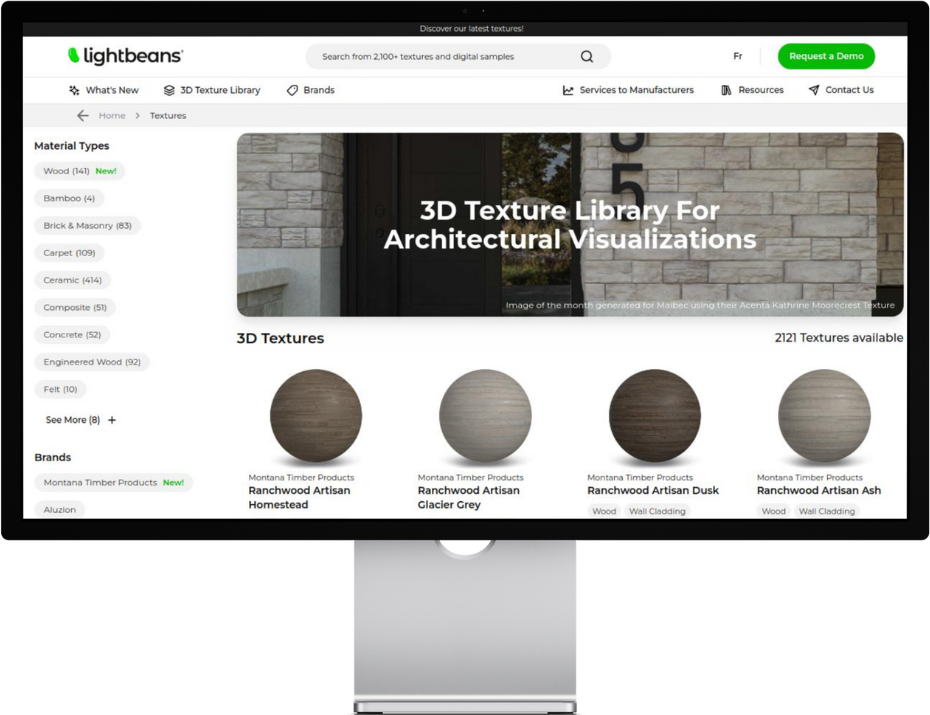


From Physical Tile to Digital Workflow: How MILE®stone Expanded Its Design Reach
The B Corp Certified manufacturer transformed its porcelain collections into digital materials designed for today’s architectural workflows.
Summary
MILE®stone partnered with Lightbeans to transform its porcelain tile collections into photorealistic digital materials that architects and designers can use directly in their rendering workflows.
The first collection launched in Q1 2026. By August 2026, more than 150 MILE®stone materials were available through Lightbeans, helping designers visualize products earlier in the creative process and bringing the brand into more project conversations.
Bringing MILE®stone’s commitment to quality into the digital experience
MILE®stone produces premium porcelain tile at its manufacturing facility in Clarksville, Tennessee, where it produces more than millions of square feet of tile annually using 100% regionally sourced raw materials. The American division of Italy’s Florim Group brought European manufacturing expertise to Tennessee in 2000, building a reputation around quality, innovation, and sustainability.
That commitment has continued to define the brand. In 2021, MILE®stone introduced one of the first carbon-neutral porcelain tile products to the market. In 2025, it became B Corp Certified, joining a select group of tile manufacturers in North America to meet the rigorous standards required for certification. Additional certifications, including GREENGUARD Gold, Declare Red List Free, and Green Squared, further demonstrate its commitment to responsible manufacturing.
With a product portfolio built around precision and performance, MILE®stone needed its digital materials to reflect the same level of quality. For architects and designers, the rendering is often the first opportunity to visualize a product in context, so inaccurate digital representations can create a disconnect between what is shown on screen and what is ultimately installed.
A response to the way designers work today
The opportunity emerged directly from conversations with the design community. Architects and interior designers working across hospitality, residential, and commercial projects began reaching out to MILE®stone for digital versions of its collections, allowing them to visualize the material in realistic project environments before making specification decisions.
For designers, digital materials are an essential part of the creative process. When a product is not available in the formats needed for rendering, it can limit how confidently a material is evaluated and presented. An accurate digital representation helps ensure that the experience envisioned on screen reflects the finished product in the real world.
Creating high-quality digital assets across an entire product portfolio requires specialized scanning technology, material expertise, and rendering knowledge. To bring its collections into the digital workflows used by today’s architects and designers, MILE®stone partnered with Lightbeans.
What a render-ready digital asset actually contains
A render-ready digital asset is not simply a photograph of a tile. It is a digital representation of how a material looks and behaves in a real environment.
Through its texture creation service for manufacturers, Lightbeans transforms each MILE®stone product into a complete set of physically based rendering (PBR) maps, capturing:
- Color and pattern variation to accurately represent the surface appearance
- Texture and depth to recreate the physical feel of the material
- Light behavior and reflectivity to ensure realistic rendering in different environments
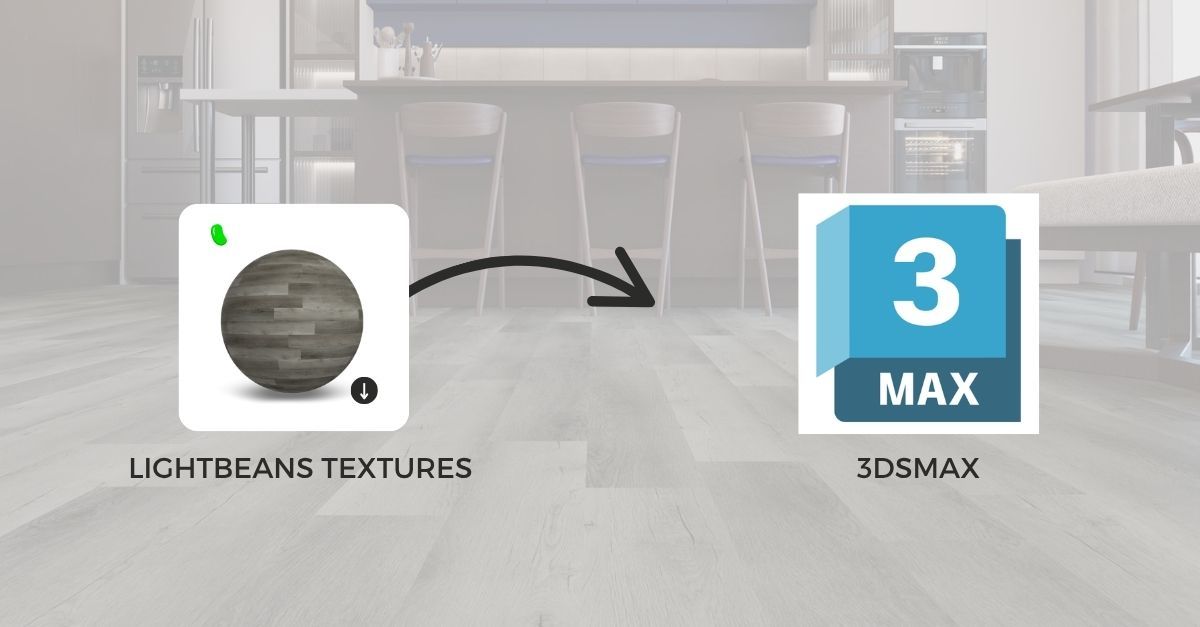
These assets are then optimized across the software environments architects and designers use every day, including SketchUp, Revit, Enscape, Lumion, 3ds Max, Twinmotion, and D5 Render.
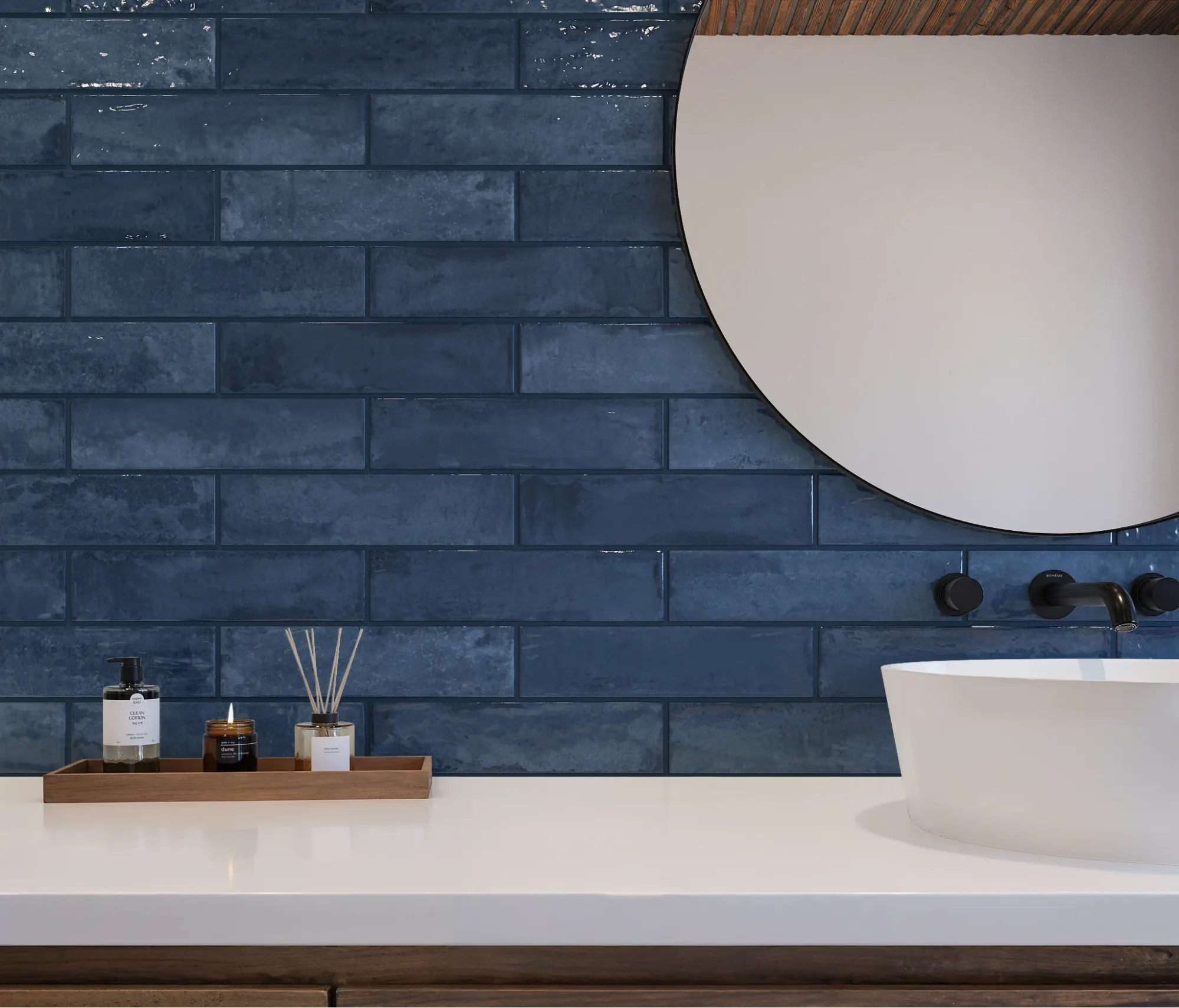
Render created by Lightbeans with the 4Earth collection texture file.
Sharing digital assets with the design community
Creating high-quality digital materials is only the first step. Making them easy for architects and designers to discover is what turns those assets into a valuable design resource.
By publishing its digital collections through Lightbeans, MILE®stone makes its products accessible directly within the workflows where materials are explored, visualized, and specified.
Each download creates another opportunity for MILE®stone materials to be explored, presented, and considered during the design process. Over time, these assets continue to support product discovery and help bring their materials into more design conversations.
MILE®stone’s digital collections are available directly through its website
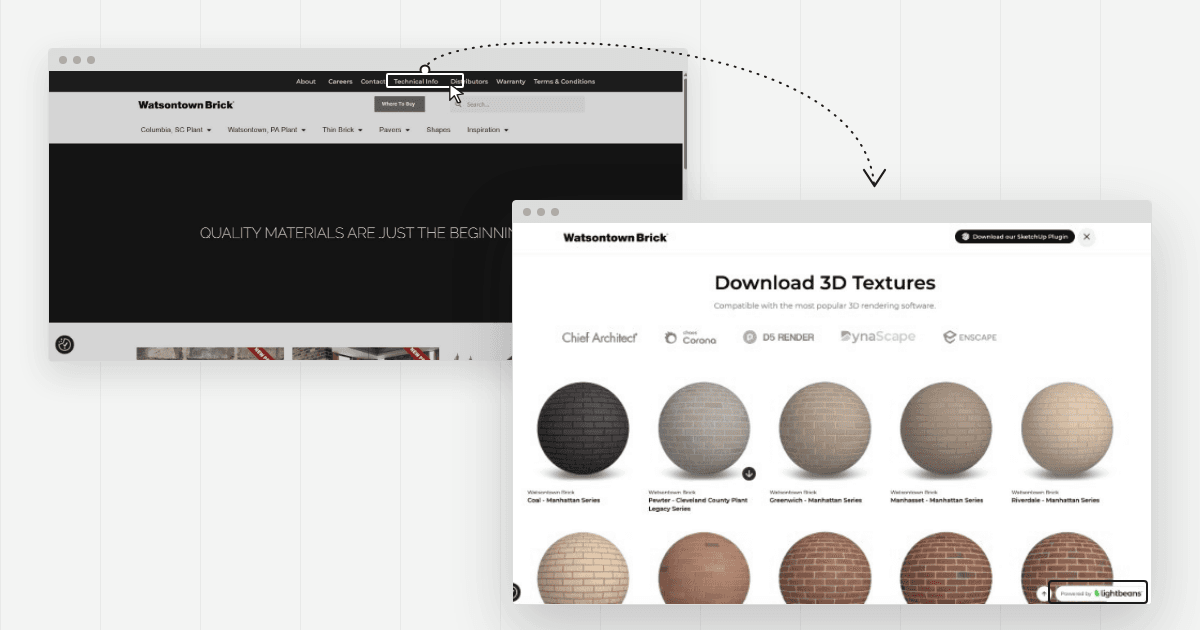
MILE®stone integrated Lightbeans directly into milestonetiles.com, linking product pages to their corresponding textures.
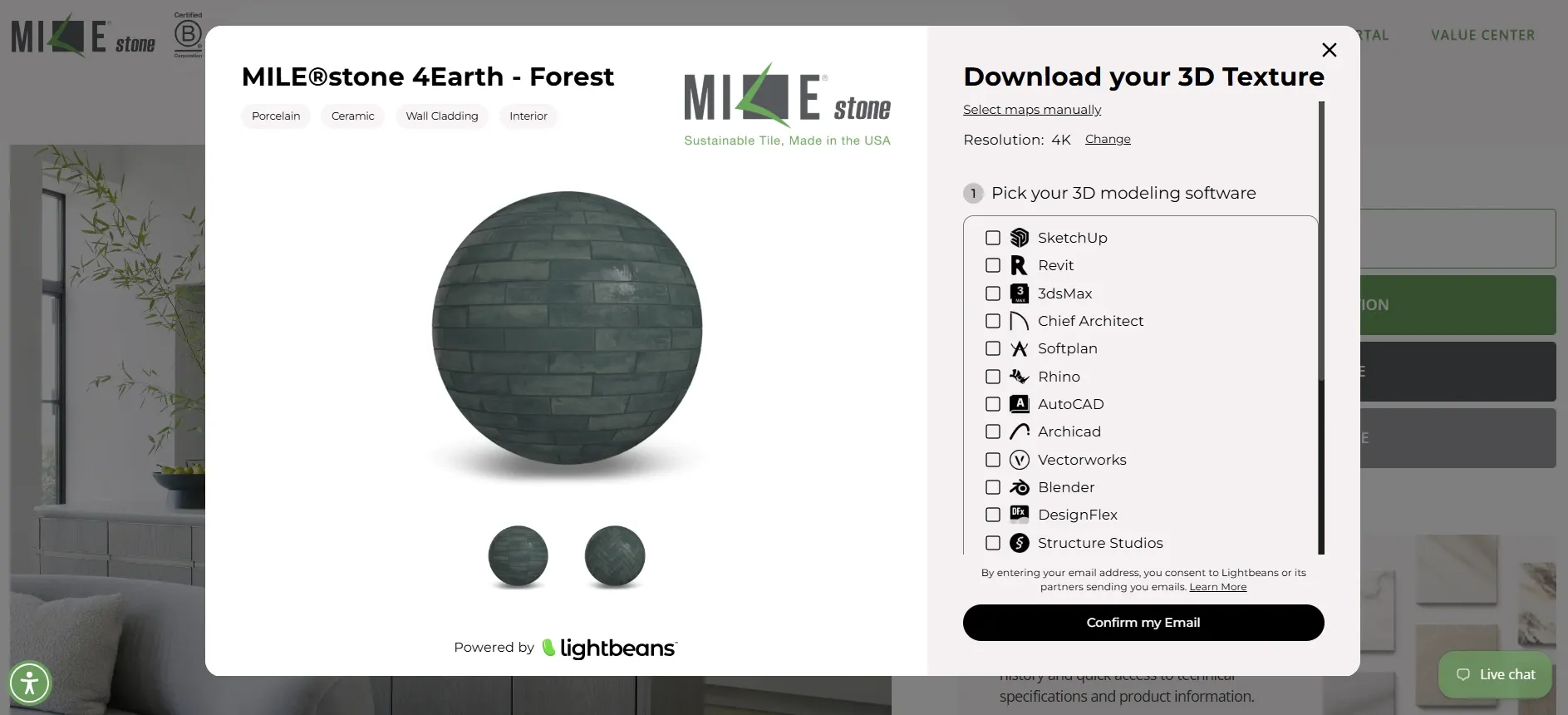
MILE®stone extended this digital experience beyond the Lightbeans library by making render-ready textures accessible directly from its own product pages. By embedding the download experience alongside product information, the brand gives architects and designers a seamless way to move from exploring a material to visualizing it within their own projects.
What’s next: a new way for designers to discover materials
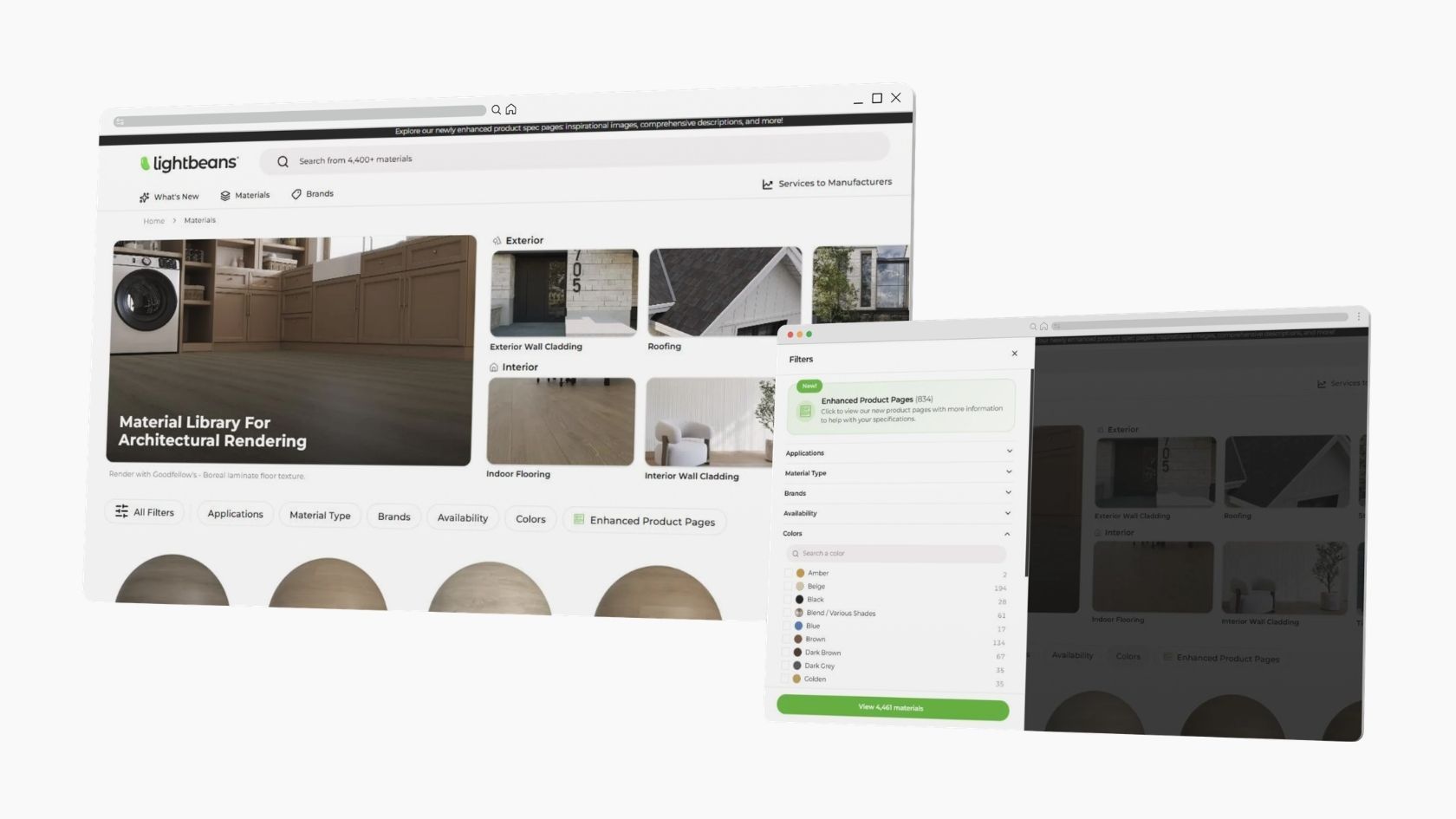
MILE®stone’s digital launch also coincided with the latest evolution of the Lightbeans designer experience, as the platform continues to expand the way architects and designers discover and evaluate building products.
The newest addition to the Lightbeans designer experience is enhanced product pages: a more visual and immersive way for professionals to explore materials. Bringing together product information, imagery, and render-ready digital assets in one place, these pages are designed to feel less like a file library and more like a digital material board that supports inspiration, selection, and specification.
For MILE®stone, this means its collections are not only available as high-quality digital materials, but are also presented through a richer experience that helps designers understand, visualize, and integrate products into their projects.
As manufacturers continue to invest in digital assets, the opportunity is no longer just making products downloadable. It is creating better ways for designers to discover, engage with, and specify those products.
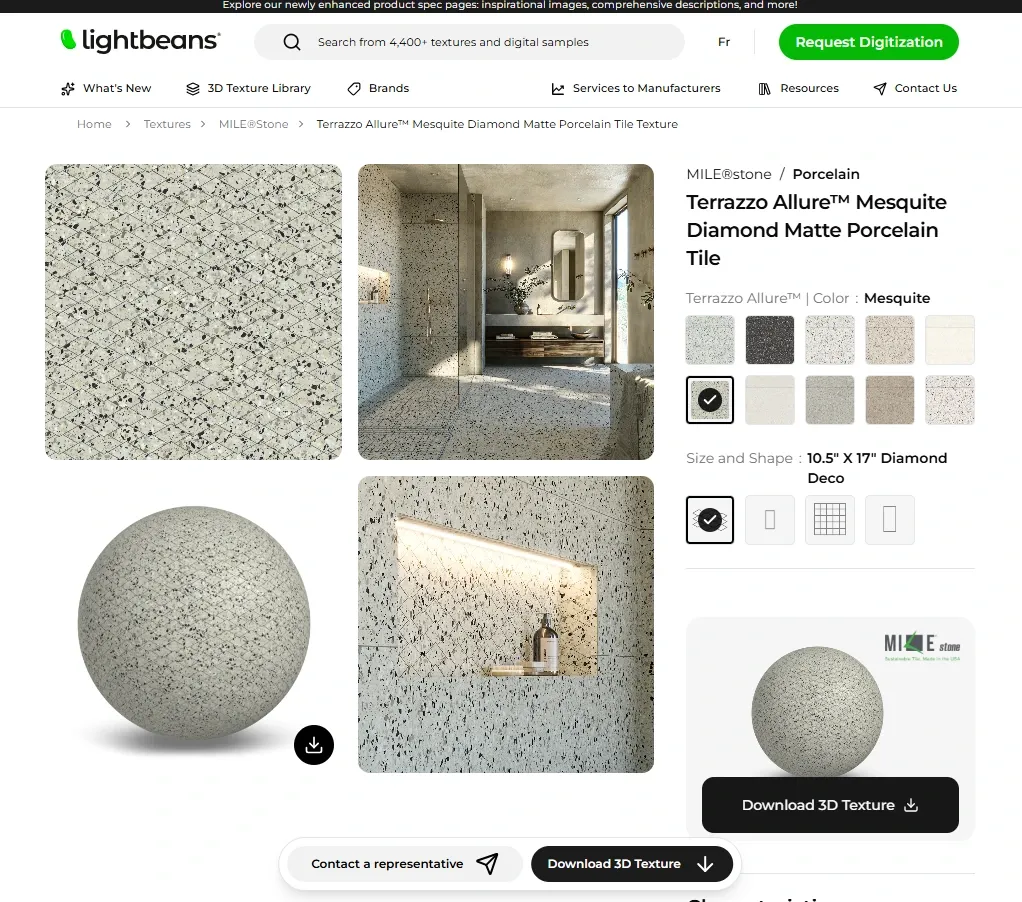
A product page from MILE®stone on Lightbeans’ website.
FAQ: Digital assets for building product manufacturers
What are digital assets for a tile or stone manufacturer?
Digital assets are render-ready versions of physical products that allow architects and designers to visualize materials in 3D software. For tile and stone, this includes physically based rendering (PBR) textures with detailed maps for color, surface depth, and reflectivity, built to accurately represent how a material appears in a finished space.
Why do architects and designers need digital versions of tile products?
Architects and designers use 3D renderings to explore materials, communicate design concepts, and help clients make decisions. When a manufacturer’s product is not available digitally, designers may have limited visibility into how that material will perform in a project environment.
Why should manufacturers make their digital assets publicly available?
Creating digital assets is only valuable if designers can find and use them. By making its collections available through Lightbeans, MILE®stone ensures architects and designers can discover and integrate its products directly into the workflows they already use.
How can digital assets support a manufacturer’s visibility with the design community?
For MILE®stone, publishing its digital collections created another way for architects and designers to engage with the brand during the specification process. Because these materials are discovered while designers are actively developing projects, digital assets help manufacturers stay connected to the conversations where product decisions are made.
About Lightbeans
Lightbeans operates North America's largest digital material texture library for architects and designers, giving thousands of design professionals free access to over 4,000 materials from 80+ manufacturing partners.
Explore MILE®stone textures on Lightbeans
Want to know how to digitize your product catalog? Get in touch with us.
Check Out Our Library
Lightbeans offers an impressive array of textures that will give you a hand in your design and architecture projects.
View the Library